Visiting Research Fellows
A man with short dark hair smiles gently, wearing a light blue collared shirt, dark patterned vest, and a light tan blazer.

Prakash Bhattarai  (M.A. '10) (spring 2026) is the alumni visiting research fellow representative, having earned his master’s in Peace Studies in 2010. A social scientist by training and education, Bhattarai has 20 years of leadership and professional experience working in social policy, conflict resolution, human rights, and governance in Nepal and the Asia Pacific region. He is the executive director and founder of the Centre for Social Change in Kathmandu, Nepal, a leading non-profit research and advocacy institute working on issues around governance, peacebuilding, labor, migration, climate change, and civic engagement. While at the Kroc Institute, Bhattarai’s research will examine how post-conflict governance arrangements in Nepal (2006-2024) have contributed to preventing the resurgence of large-scale armed violence and maintaining peace since the country’s Comprehensive Peace Accord in November 2006. Bhattarai earned his Ph.D. in Peace and Conflict Studies at the University of Otago, Dunedin, New Zealand in 2014.


A smiling woman with long blonde and gray hair wears a light blue shirt and a dark blue floral scarf. She stands in a softly lit interior hallway.

Vera Brandner (academic year 2025-26) is a scholar-artist trained in photography who combines her skills with social engagement to explore how the arts -- spanning visual, music, and performance -- can be transformative in peace processes. Specific to her time at the Kroc Institute, Brandner aims to apply her creative and scholarly approach to the intersectionality of identity, power, and structural violence, providing innovative insights into how the arts and visual culture can contribute to social change and reconciliation. Brandner earned her Ph.D. in transdisciplinary methods development, with a focus on visual culture, conflict transformation, and social inequality from the Leuphana University of Lüneburg and her M.A. from the University of Vienna.


Smiling woman with dark, curly hair wearing a navy shirt and a turquoise pendant necklace in a well-lit building hallway.

Katie Conlon (M.A. '14) (academic year 2025-26) has nearly 20 years of international experience applied to peacebuilding, the environment and climate change. For the past nearly eight years, Conlon has lived in South Asia, conducting extensive fieldwork in the Himalayas. Conlon's fellowship at the Kroc Institute will enable her to write about her environmental research and its connection to climate change policy and human rights in South Asia within the context of the Third Pole, the Himalayas. Conlon earned her Ph.D. from Portland State University after graduating from the University of Notre Dame with a master's degree in Peace Studies in 2014. She is the founder and director of Ecoseva Institute, a nonprofit based in Portland, Ore., that proactively engages in environmental education and research through the spirit of revitalization, regeneration and interconnection. Conlon is also an affiliate researcher with Portland State University, a fellow of the Royal Geographic Society, has been a National Geographic Explorer since 2019, and is a WINGS Women of Discovery Flag Carrier.


A man smiles directly at the camera. He wears a white shirt, pink patterned tie, and navy blue quilted vest.

Francisco Diez (spring 2026-fall 2026) is a longtime mediator with extensive experience working with governments, international and national nongovernmental organizations – The Carter Center, The Whitaker Peace and Development Initiative, the United Nations Development Programme (UNDP), the Organization of American States (OAS), and others – as well as with universities and civil society organizations in Latin America.

As the representative of The Carter Center in Venezuela from 2002 to 2004, he co-mediated between former President Hugo Chávez and the opposition with the Secretary General of the OAS. Diez also served as the coordinator of the Regional Support Network for the UNDP Democratic Dialogue Program for Latin America and the Caribbean from 2004 to 2007, providing support on peacebuilding processes to the UNDP national offices. As The Carter Center representative in Latin America from 2007 to 2010, he created the Venezuela, Bolivia, and Ecuador-Colombia programs. During this time, Diez launched the Binational Dialogue Group for Ecuador and Colombia and served as the mediator between both presidents.

Diez was a representative for the Kroc Institute’s Peace Accords Matrix program from 2014 to 2019, advising the Office of the High Commissioner for Peace in Colombia and helping to create the Barometer Project there to monitor the implementation of the country’s 2016 peace accord. Also on behalf of the Kroc Institute, he was a special advisor on the Alianza Civica movements in Nicaragua, and advised the UN resident coordinator on mediation in Ecuador during the 2018 crisis.

From 2020 to 2023, Diez was a full-time member of the Stand By Team of senior mediators at the UN Mediation Support Unit. Since 2023, he has been in private practice, consulting on the UNDP Perú and advising María Angela Holguín, the personal envoy of the UN Secretary General for Cyprus. While at the Kroc Institute in the coming year, Diez intends to draft a comprehensive and practice-oriented handbook on peacebuilding tools, strategies, and techniques based upon his experiences in Latin America. The guide will be designed as a resource for practitioners and scholars involved in the field of peacebuilding. Diez earned his law degree from the University of Buenos Aires Law School in 1982, followed by a master’s degree in Public Administration from Harvard University, JFK School of Government, where he was awarded the John Vernon Prize for Academic Excellence. This was followed by postgraduate studies at the University of Maryland and the London School of Economics, on International Mediation.


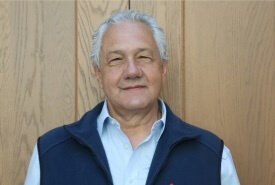
Man with graying dark hair, wearing a tan sweater over a white collared shirt, arms crossed, smiles faintly.

Doğukan Cansin Karakuş (spring 2026) is a postdoctoral researcher specializing in mediation, ceasefires, and peace agreements in civil wars. He currently holds a postdoctoral position at Christian-Albrechts-Universität zu Kiel (Germany), is an affiliated visiting researcher at the Department of Peace and Conflict Research at Uppsala University (Sweden), collaborates with Professor Peter Wallensteen in Working Group on International Measures for Compliance with Nuclear Disarmament Regimes, and serves as a lecturer at the Institute of Political Science at Heidelberg University (Germany). During his doctoral research, Karakuş examined the role of long-term third-party mediators in the implementation of peace agreements, with comparative analyses of Northern Ireland, El Salvador, Lebanon, and Mindanao.

Karakuş has extensive experience in large-scale fieldwork and data collection and has led, coordinated, and conducted document-based, social media–based, and survey research—including experimental studies—in conflict-affected regions such as Syria, Mosul (Iraq), and Turkey, with participant samples exceeding 11,000 respondents. He has also compiled a unique dataset of more than 140 local ceasefire agreements and mediation initiatives from the Syrian civil war and is currently developing additional survey research on public acceptance of potential peace proposals and local third-party mediation among communities in Yemen.

An author of numerous peer-reviewed journal articles, Karakuş seeks to advance a comprehensive mediation framework during his time at the Kroc Institute by addressing the central question: Under what conditions can third-party mediation effectively facilitate the transition from ceasefires to comprehensive peace agreements in armed civil conflicts? Karakuş received his Ph.D. in Political Science from Georg-August-Universität Göttingen in 2021, including research stays at Uppsala University’s Department of Peace and Conflict Research and the Peace Research Institute Oslo (PRIO).


A woman with reddish-brown curly hair smiles gently, wearing a light blue top and a light green patterned scarf. She stands in front of a blurry background of wooden doors.

Siobhán McEvoy-Levy (spring 2026) is a professor of Political Science and Peace and Conflict Studies at Butler University in Indianapolis, as well as the director of the University’s Desmond Tutu Peace Lab. She is also a member of the Folke Bernadotte Academy International Research Working Group on Youth, Peace and Security. Through her work over the last 25 years, McEvoy-Levy has sought to make the case for young people’s active inclusion in peace processes, highlighting their roles in knowledge production about peace and peacebuilding. Her scholarship focuses on how young people conceptualize, narrate and enact conflict, violence and peace and how they participate in (everyday) peace work. Other interests include youth participatory research methods and critical peacebuilding through the arts, museums, and pop culture.

McEvoy-Levy is currently working on a monograph exploring the role of artists and art activists in peacebuilding. Other projects underway include co-leading a photography, street art, and youth-led peacebuilding effort; co-editing a special issue on the methods and approaches to studying youth-led futures of peace and security; co-editing a volume on youth, peace, and world-building; and working with youth peacebuilders to develop an Engaged Mindfulness and Meditation curriculum specifically for young activists and peacebuilding practitioners.

As the director of the Desmond Tutu Peace Lab for the past seven years, McEvoy-Levy has organized a variety of campus dialogues, speakers, study tours, and community partnerships to mentor and develop the next generation of researchers, educators and activists focused on peacebuilding. While at the Kroc Institute, she will focus on how certain methods/mediums of art used in activism have ideological, ethical and material effects, and how these support or detract from movements, campaigns, and the practice of peace. McEvoy-Levy is originally from the North of Ireland and splits her time between Indiana and Ireland. She earned her Ph.D. in History and International Relations from the University of Cambridge in 1999.


A broadly smiling man with a beard, round gold-rimmed glasses, and a silver hoop earring wears a white shirt and tan blazer, standing in a hallway.

Mujahid Osman (MGA '19) (fall 2025) earned his Ph.D. in Asian, African, and Middle Eastern Religions from Emory University after having earned his Master of Global Affairs degree in International Peace Studies from the Keough School of Global Affairs. While at the Kroc Institute, Osman is focusing on his book project, "Witnessing for God: Living Out Islamic Ethics in Cape Town," which analyzes the multiple ways in which a Muslim community struggles to be a "witness for God," as the Qurān encourages its members to promote a version of justpeace in post-apartheid South Africa.


More information on visiting research fellowships »