Meet the Class of 2026
International Peace Studies Major
The International Peace Studies major in the Master of Global Affairs program builds sustainable peace and justice through careers in policy analysis and political change, government and organizational leadership, and conflict analysis and transformation. This cohort of students join a global network of more than 600 master’s graduates addressing violent conflict and peace, human rights and human development, environmental sustainability, and related issues. Students in this concentration are considered Kroc Scholars.

Fatuma Abiya (Uganda) is a Ugandan peace practitioner and human rights activist who holds a bachelor’s degree in law from Uganda Christian University. She has previously worked at the Women Advocacy Network (WAN) Uganda, an organization that supports women and children born of war. Her focus has been on projects related to peace, transitional justice and transformative memory, while advocating for vulnerable groups of people especially women, children born of war, and people living with disabilities. She has also worked at Mugarura, Mwijusya & Co. Advocates as a legal associate. As someone who believes that we should sit at the table in order to effectively raise our voices, Fatuma has held a number of leadership positions while in her lower and higher levels of education. She is the current Speaker of the Women Advocacy Network youth chapter, a pioneer member of SHELEADS 4 PEACE, and The Research Network, Women Peace and Security (WPS) agenda. In 2021, Fatuma won the Youth Human Rights Awards by the research Network, Women Peace and Security (WPS).

Shokhinakhon Bakhromova (Uzbekistan) is the communications and partnerships manager at the Institute for Advanced International Studies in Tashkent, Uzbekistan. With expertise in gender issues and community engagement, she has worked with the United Nations Development Programme Uzbekistan, coordinating the CallUmida.uz anti-street harassment initiative and contributing to gender equality and youth empowerment projects. She founded the "WomanUP" leadership program at the American Center Tashkent and promotes peace and non-violence as an International Fellow at the Martin Luther King Jr. Center. Shokhinakhon holds a Bachelor's degree in International Relations from the University of World Economy and Diplomacy in Uzbekistan. Additionally, she has been involved with TEDxMustaqillikSquare, Global Shapers Tashkent Hub, and Go Viral. Shokhinakhon is the recipient of a Kroc Institute Fellowship.

Shir Aharon Bram (Jerusalem) completed a dual bachelor’s degree in general and comparative literature and Islamic and Middle Eastern studies from the Hebrew University of Jerusalem. His research focuses on conflict societies, trauma, narratives, propaganda, media, and communication alongside fieldwork with people.
Shir has worked as a content creator and lecturer for the Regional Thinking Forum, an Israeli NGO bringing content beyond the mainstream narrative of Israeli media, and has a background in journalism as a writer and editor. Shir is the recipient of a Kroc Institute Fellowship.
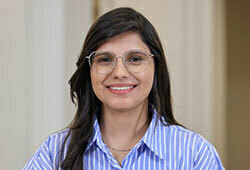
Rida Ejaz (Pakistan) holds a bachelor’s degree in international relations from the Balochistan University of Information, Technology, Engineering & Management Sciences, where she graduated with the Presidential Gold Medal. Her research interests include countering violent religious extremism, climate change diplomacy, and addressing social inequalities.
Rida served as a research intern at an institute affiliated with Pakistan’s Strategic Plans Division, where she contributed articles on religious tolerance, meritocracy, and related topics published in notable outlets such as Pakistan Today, Modern Diplomacy, and Express Tribune.
Rida also completed an internship with an organization affiliated with UNHCR, where she organized career counseling sessions, conducted field research in refugee camps, and contributed to a policy brief aimed at increasing educational enrollment and reducing dropout rates for Afghan refugees in Balochistan. In recognition of her efforts, she received the Balochistan Talent Hunt Award and a research grant from UNHCR for her study assessing the long-term sustainability of NGO-led entrepreneurship initiatives for refugee women in Balochistan in post-repatriation contexts.
From 2018 to 2023, Rida volunteered as the chief executive officer for the Balochistan chapter of a leading non-profit organization in Pakistan, where she spearheaded initiatives focused on social change and youth engagement. Additionally, as a monitoring & evaluation officer for the Balochistan Human Capital Investment Project, she trained local school teachers in Balochistan and developed action plans to enhance the educational skills needed in today’s context.
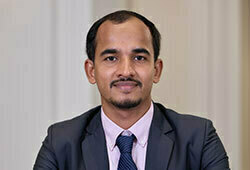
Mohammad Furqan (India) received a B.A. in English literature and an M.A. in Islamic studies from Jamia Millia Islamia University, New Delhi. Before coming to Notre Dame he was part of Contending Modernities' Madrasa Discourses (advancing scientific and theological literacy) project in India, first as a participant and later as an administrative faculty assistant. Coming from a religious background and being a Madrasa graduate, Mohammad found these opportunities remarkable, helping him to understand tradition and modernity, and to learn about science, theology, and Western philosophy. Most recently, Mohammad served as a Young Leaders Fellow in the Indian state of Bihar, where he worked on a grassroot socio-political developmental project with a new political party (known as Jan Suraaj). His research interests include religion and peace, interfaith dialogue, pluralism and freedom of religion. Mohammad is the recipient of a Kroc Institute Fellowship.
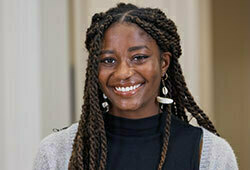
Whitney Hedlund (United States) was most recently employed with International Justice Mission as the global compliance lead for USG awards, focused on combating forced labor, cyber-scamming, and sex trafficking. Previously, Whitney spent nearly 5 years at the United States Agency for International Development as an analyst in the Research and Policy Division, working on cross-cutting issues such as human rights, biodiversity, and abuses within the health system. Whitney has relevant field experience in Dakar, Senegal, and Nablus, Palestine. In Dakar, she researched the political mobilization of Senegalese youth for her undergraduate certificate program. In Nablus, Palestine, she served as the children’s development and women’s empowerment intern for Tomorrow's Youth Organization. Whitney has worked on issues surrounding child protection and education at World Vision as well as government affairs and advocacy for the Council on American Islamic Relations. Whitney holds B.A.s in French and international relations as well as a certificate in human needs and global resources from Wheaton College (Ill.). Whitney is the recipient of a Kroc Institute Fellowship.

Oksana Ivantsiv (Ukraine) is a documentary film producer and human rights activist focusing on collective memory, war crimes, and gender equality. Currently a Fulbright Scholar, she is deepening her studies in peace and conflict, with a particular interest in storytelling, international law, global relations, and diplomacy.
Oksana holds an LL.M. from the National University of Kyiv-Mohyla Academy and previously worked in the Ukrainian Parliament. In 2017, she began her career in documentary filmmaking as the executive producer of the Invisible Battalion documentary (dir. Iryna Tsylyk, Alina Gorlova, Svitlana Lischynska, 2017). This film highlighted gender inequality in the Ukrainian army, contributing to legislative reforms that allowed women access to combat positions. Building on this impact, in 2018 she worked as executive producer of the documentary, No Obvious Signs (dir. Alina Gorlova, 2018), which addressed post-traumatic stress disorder (PTSD) as an "invisible wound" of war; the film was recognized as one of the top 100 films in the history of Ukrainian cinema by the Dovzhenko Center.
In 2020, Oksana founded the Arts&Rights NGO, which promotes democracy and human rights through multidisciplinary projects: documentary filmmaking, analysis, and impact campaigns. In August 2024, Oksana premiered the TV series, A-Thousand-Year War, on the Ukrainian broadcaster Suspilne. This series investigates Ukrainian-Russian relations in reverse chronological order, starting with the recent full-scale invasion and delving back to the Middle Ages.
Oksana is currently producing the documentary, Women Occupied, a Ukrainian-German co-production that follows women from Ukraine, Kosovo, and Germany as they confront the trauma of conflict-related violence and seek healing and justice. Oksana speaks Ukrainian, English, and German. She is the recipient of a Kroc Institute Fellowship.

Siena Mann (United States) is a skilled community organizer and campaign manager with 10 years’ experience working in social movement non-profits. Most recently, Siena worked for the Colorado Immigrant Rights Coalition where she won hard-fought campaigns to protect immigrant rights and expand opportunities to undocumented Coloradans. She organizes with the Occupied People’s Forum, bringing together peace and justice activists from different occupied territories around the world with the aim of strengthening strategies in the struggle against 21st-century colonialism. Siena has lived in Nicaragua and Mexico, where she worked on issues of migration and economic justice and is fluent in Spanish and English. She graduated from Haverford College in 2014 with a B.A. in Spanish, anthropology and environmental studies. Siena is the recipient of a Kroc Institute Fellowship.

Daryl Mifsud (Malta) is a first-generation student who left his home country to pursue further studies abroad, starting at United World College in the Netherlands in 2016. He is a recent graduate from Earlham College, where he focused his studies on peace and conflict resolution and African/African American studies and developed his passion for Decolonization. His thesis focused on the effect of a colonized mind on collective Maltese consciousness.
During and after college, Mifsud worked with On Earth Peace as a development organizer, focusing on fundraising and donor relations in the non-profit sector. He was one of 10 students worldwide to be chosen as a recipient of the Future Nobel Laureates Fellowship, where he presented his project on Decolonizing education in Stockholm, Sweden, during the Nobel Week Dialogue. Prior to attending Notre Dame, Mifsud worked for the Permanent Mission of Malta to the United Nations during the country's Security Council tenure, where he acted as personal assistant to the Deputy Permanent Representative.
At the Keough School, Mifsud is committed to further learning and discerning to expand decolonial literature in Malta. He is the recipient of a Kroc Institute Fellowship.
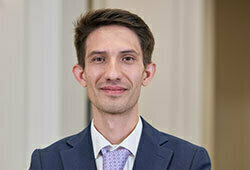
Rustam Mukhamedov (Turkmenistan) most recently worked as a political scientist, policy researcher and analyst, contributing writer, and digital rights expert covering the intersection of technology, human security, human rights, democratization, civic activism, and good governance in Turkmenistan and broader Central Asia. In this capacity, he has collaborated with local, regional, and international organizations, NGOs, research institutes, think tanks, and media outlets, namely the OSCE Representative on Freedom of the Media, Freedom House, the Institute for War and Peace Reporting Central Asia, Progres Foundation, the Diplomat, and others. He is also a former non-resident fellow at the Open Internet for Democracy Initiative (Open Internet Leaders program), Eurasia Lab Fellowship Program of the Institute of European Politics in Berlin, and the Central Asia-Azerbaijan Fellowship Program of the George Washington University. Rustam’s research and professional interests center on the social and political significance of the evolving technological landscape, namely its dualistic potential of fostering social cohesion and perpetuating existing inequalities and social exclusion, and driving polarization and hate crime. Rustam holds an M.A. in politics and security from the OSCE Academy in Bishkek and a B.A. in political science and international relations from American University in Bulgaria. He is the recipient of a Kroc Institute Fellowship.

Joshua Carlo Pile (Philippines) graduated magna cum laude from the University of Santo Tomas in Manila with a degree in political science in 2014. He has over a decade of experience in communications and research, focusing on peace, democracy, populism, gender, climate change, justice, and human rights. Josh has worked in all three branches of government in the Philippines—including, most recently, as speechwriter for the Chief Justice of the Supreme Court and for the Vice President—as well as in civil society and on national political campaigns. His interests include peace and communication, tech and disinformation, and transitional justice. Josh is the recipient of a Kroc Institute Fellowship.

Camden Robertson (United States) is passionate about violence prevention, nonviolent action and trauma healing. She graduated summa cum laude from Pace University (NYC) with a B.A. in peace & justice studies and political science. Camden worked as an advocate and confidential resource for survivors of interpersonal violence for several years, using her knowledge in sexual violence prevention and education as a United Nations Millennium Fellow and a consultant for health and counseling services. Her academic research has focused on nonviolent climate organizing, receiving the Peace and Justice Studies Association Best Undergraduate Thesis award for her ethnographic study of extinction rebellion and the October 2022 Occupy in New York City. Camden’s most recent project is a collaborative work on intersectionality, environmental violence and nuclear development on Navajo Land. She is interested in creative and artistic approaches to conflict transformation, including short films. Camden is the recipient of a Kroc Institute Fellowship.

Maria Eduarda Kobayashi Rossi (Brazil) is a young poet and researcher passionate about peace and gender studies. She holds a bachelor's degree in international relations from São Paulo State University (UNESP), summa cum laude, and has completed student mobility programs at the University of Buenos Aires (UBA) and the University of Coimbra (UC). She created the "Seeding Peaces" project for students aged 11 to 14 in her hometown focused on human rights and education for peace. She has actively participated in various research projects, academic activities, research groups, and volunteering initiatives. Maria has received many accolades for her research work, including the first place prize as the best research in human science in 2023, and honorable mentions from the Brazilian Association of International Relations (ABRI) and São Paulo State University (UNESP). Her research interests include: art and peacebuilding, conflict transformation, gender studies, strategic peacebuilding, transitional justice, and peace education. She is the recipient of a Kroc Institute Fellowship.

Gloire Sebuyange (Democratic Republic of the Congo) is a Congolese peace practitioner and a current Fulbright Scholar. He holds a B.A. in peacebuilding and development from the Protestant University of Rwanda (PUR). Gloire recently worked as a program assistant for Congo Peace Network, focusing on empowering conflict victims to participate in peacebuilding initiatives in the Democratic Republic of the Congo (DRC). During his undergraduate studies, he volunteered at the Center for Research and Action towards Sustainable Peace and Development, where he served as facilitator of peace related concepts, nonviolent communication, and the alternatives to violence program in Africa’s Great Lakes Region, especially in Rwanda and Eastern Congo.
Having experienced violent conflicts in the Eastern DRC since his childhood, Gloire is driven by a deep passion and motivation to contribute to peace and positive change in the DRC, the Great Lakes Region and across Africa through his educational program called “Talk Change.” At the Keough School, Gloire’s research centers on exploring how transitional justice can contribute to peacebuilding and conflict resolution in conflict-torn societies, with a focus on his home country. He is the recipient of a Kroc Institute Fellowship.

Piyusha Sumanapala (Sri Lanka) graduated from Ritsumeikan Asia Pacific University in Japan with a bachelor of social science degree in international relations and peace studies. During her undergraduate studies, she completed an overseas exchange program at City University of New York, College of Staten Island, focusing on international studies.
Upon returning to her home country of Sri Lanka, Piyusha worked as a UN Volunteer, promoting volunteerism in the country's development agenda. While pursuing a postgraduate diploma in human rights at the University of Colombo, she continued to deepen her passion for dance and movement practices. Piyusha completed a pedagogical performance pathways certificate course and a 200-hour yoga teacher training (International Yoga Alliance accredited). Her research interests include movement and embodied knowledge in the field of peace. Piyusha is the recipient of a Kroc Institute Fellowship.
Jennifer Betz
Assistant Director of the International Peace Studies Concentration
Jbetz2@nd.edu
+1 (574) 631-0934