
More than 60 participants from around the world visited the University of Notre Dame in late May as part of the Strategic Peacebuilding Academy hosted by the Kroc Institute for International Peace Studies, part of the Keough School of Global Affairs.
With ‘peace processes’ as its theme, this year’s Academy brought together researchers, practitioners, and those in the policy world working on peacebuilding issues to foster professional development and relationship-building across sectors. Over the four-day program, facilitators and participants addressed the “before, during, and after” phases of peace agreements using case studies as examples, such as Colombia, the Philippines, Nepal, the Democratic Republic of the Congo, South Sudan, Cyprus, and Afghanistan, among others. In addition to regionally focused sessions, others highlighted thematic and demographic aspects of peace processes.
“It was a thought-provoking and rejuvenating experience,” said Kathryn Sawyer Vidrine, co-chair of the Academy, who also serves as the assistant director for doctoral studies at the Kroc Institute.
“At a time when peacebuilding efforts are being systematically dismantled and de-funded in many places, it was reassuring for attendees to be reminded that we’re not doing this work alone. Just knowing that was tremendously uplifting.”
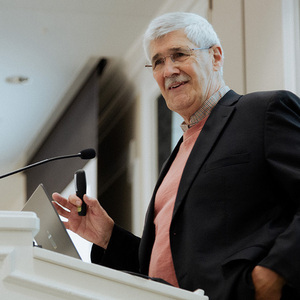
Two keynotes bookended the Academy. John Paul Lederach, award-winning scholar-practitioner, author, and professor emeritus of international peacebuilding at the Kroc Institute, offered the opening keynote address. He highlighted his 50-year arc of experience and personal involvement facilitating peace processes, emphasizing interdependencies and the cyclical nature of stages in peace agreements at key moments in a given process. The concluding keynote came from Monica McWilliams, co-founder of the Northern Ireland Women’s Coalition political party and elected as a delegate at the Multi-Party Peace Negotiations, which led to the 1998 Good Friday Peace Agreement. Her remarks provided hope: about how conflicts that once seemed intractable can be overcome.
In between these addresses, the Academy offered nearly 30 panels, breakout and plenary sessions, and work group activities.
“This year’s program provided a needed space for people to come together as a community and receive support from each other,” said Asher Kaufman, John M. Regan, Jr. director of the Kroc Institute.
“Listening to the concluding reflections from participants was gratifying, as was witnessing the Kroc Institute’s convening power and our place in the field – highlighting our strengths in connecting scholarship with policy and practice,” he said.
The Academy was built on the foundation of the Kroc’s Institute’s long-running Summer Institute. Launched in 2008, the Summer Institute brought together university and college faculty and administrators interested in developing a new peace and justice studies program, or taking their existing peace studies offerings to the next level of design and rigor. When the program was put on hiatus because of the pandemic, the Kroc Institute saw an opportunity to take that time and thoughtfully redesign a summer gathering that would be thematically focused and meet the needs and interests of prospective participants.

“I was impressed by how well organized and diverse the Academy was – from the variety of sessions, to the topics addressed, to the diversity of participants from around the globe,” said Harry Anastasiou, a professor of international peace and conflict studies at Portland State University (Portland, Ore.) who led a breakout session on Cyprus.
Several Kroc Institute programs and faculty played lead roles at this year’s Academy – as panelists, facilitators and moderators, and offering case studies or simulation exercises related to peace processes. Among these were Josefina Echavarría Álvarez and Laurie Nathan, directors of the Peace Accords Matrix and Mediation programs, respectively, and Lisa Schirch, director of the PeaceTech and Polarization Lab, whose expertise includes the use of AI and technology for social cohesion.
The Barometer Initiative team in Colombia, part of the Peace Accords Matrix and tasked with monitoring implementation of the 2016 Colombian peace agreement, was well represented and highlighted their research, policy, practice, and work with civil society throughout the week.
“Each day participants were able to engage in a variety of sessions designed to assist them when faced with pressing issues of peacebuilding and specifically, peace processes,” said Erin B. Corcoran, executive director of the Kroc Institute and co-chair of the Academy with Sawyer Vidrine.
“I’m very proud of how this program came together, thanks to the dedication of a steering committee and hard-working student volunteers. It was an incredibly successful and rewarding effort,” said Corcoran.
‘Modes of Healing’ will be the theme of next year’s Academy, to take place May 26-30, 2026 on Notre Dame’s campus. The program will provide space for participants whose peacebuilding work relates to such disciplines as performance and fine arts, memorials and memory, trauma studies, and justice work in local communities.